
You finish serving customers, answering messages, managing employees, and handling the unexpected problems that come with running a business. Then, when the workday should be over, another task is waiting: receipts, transactions, invoices, and spreadsheets.
For many small business owners, bookkeeping as a second job is not an exaggeration. It is the reality of trying to keep financial records organized while managing every other part of the business. The issue is not that bookkeeping is unimportant. It is that an inconsistent process can turn a necessary responsibility into an exhausting after-hours routine.
On this page
Why Does Bookkeeping as a Second Job Feel So Overwhelming?
Bookkeeping involves more than entering numbers into a spreadsheet. It means keeping track of income and expenses, organizing supporting documents, reviewing transactions, and making sure financial information stays current.
When these tasks are postponed, they tend to accumulate. Receipts get misplaced, transactions become harder to identify, and questions that could have been answered earlier take longer to resolve.

The problem is not simply the amount of paperwork. It is the time and energy spent trying to catch up.
Consistent records also help business owners understand their financial activity and support their tax reporting. The IRS explains why keeping business records matters in its guide to business recordkeeping.
What Happens When Financial Records Fall Behind?

When bookkeeping becomes a task you handle only when you have spare time, the effects can reach beyond a messy spreadsheet.
1. You Spend Time Searching Instead of Managing
Instead of focusing on customers, employees, or daily operations, you may find yourself looking for receipts, checking old transactions, or trying to remember what a payment was for.
You spend time searching instead of managing. Over time, these small interruptions can make an already busy schedule feel even more demanding.
2. Your Financial Reports Become Harder to Interpret
When transactions are incomplete or have not been reviewed, it becomes more difficult to understand what your reports are showing. You may have numbers in front of you without having a clear picture of your business’s financial activity.
Keeping records organized and reviewing them regularly can make that information easier to follow.
3. Tax Preparation Becomes More Stressful
When tax time arrives, missing documents and unclear transactions can create additional work. Instead of preparing with organized records, you may have to spend time gathering information and resolving questions from previous months.
Keeping your books current throughout the year can make tax preparation more organized and less rushed.
How to Stop Treating Bookkeeping as a Second Job
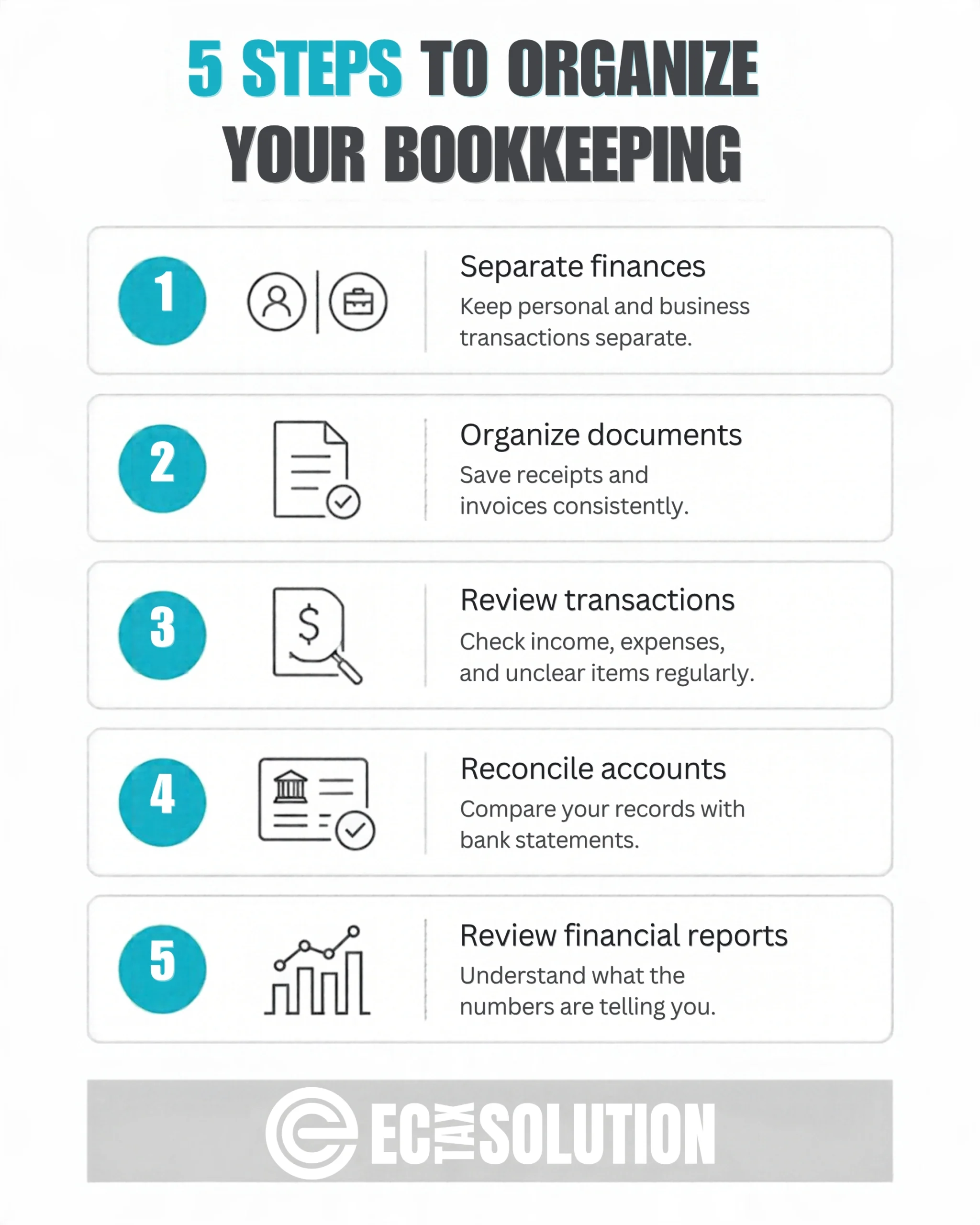
The goal is not to spend more hours on bookkeeping. It is to build a process that makes the work more manageable.
The goal is to make bookkeeping a regular business process, not a task you tackle only when things get overwhelming.
If bookkeeping as a second job is taking time away from running your business, a consistent process can help.
These habits can help create a more consistent process. The U.S. Small Business Administration also offers resources to help business owners manage their operations through its business management guidance.
When Does Professional Bookkeeping Make Sense?
Doing your own bookkeeping may work for some businesses, especially when transactions are manageable and you have a consistent process. But as responsibilities grow, keeping up with the records can become harder to fit into your schedule.

It may be time to consider support if you regularly spend evenings catching up on transactions, struggle to locate documents, or find that your accounts and reports are not being reviewed consistently.
Professional bookkeeping can help establish consistent records and a process that fits your business. It can also give you more room to focus on customers, operations, and business decisions while your financial records receive regular attention.
The right approach depends on your business’s needs, transaction volume, and available time. The important thing is to have a process that keeps your records organized and useful.
Frequently Asked Questions
Is Bookkeeping the Same as Tax Preparation?
No. Bookkeeping involves recording, organizing, and reviewing financial transactions. Tax preparation uses relevant financial information to prepare tax returns. Organized bookkeeping records can help support the tax preparation process, but the two activities are not the same.
How Often Should a Small Business Update Its Books?
The right schedule depends on the business and its transaction volume. Reviewing transactions regularly and reconciling accounts on a consistent schedule can help prevent work from accumulating. Many businesses benefit from a monthly review, supported by ongoing document organization.
Can a Small Business Owner Do Their Own Bookkeeping?
Yes. Some owners can manage their own bookkeeping when they have the time, knowledge, and a reliable process. If the work becomes difficult to maintain or takes time away from essential business responsibilities, professional support may be worth considering.

Conclusion: Your Business Is Already a Full-Time Job
Running a business requires attention, energy, and countless decisions every day. Bookkeeping is important, but it should not have to take over the hours you need to manage and grow your business.
Bookkeeping as a second job doesn’t have to remain part of your daily routine.
Your business is already a full-time job. A consistent bookkeeping process can help you keep financial records organized, understand your business activity more clearly, and spend less time catching up on paperwork.
At EC Tax Solution, we provide bookkeeping support to help small businesses keep their financial records organized. Contact our team to discuss your bookkeeping needs and find a process that fits your business.